We’re a team of apparel industry veterans on a renewed mission to protect our planet by turning textile waste into new fiber.
Accelerating the Circular Revolution Through Textile Recycling
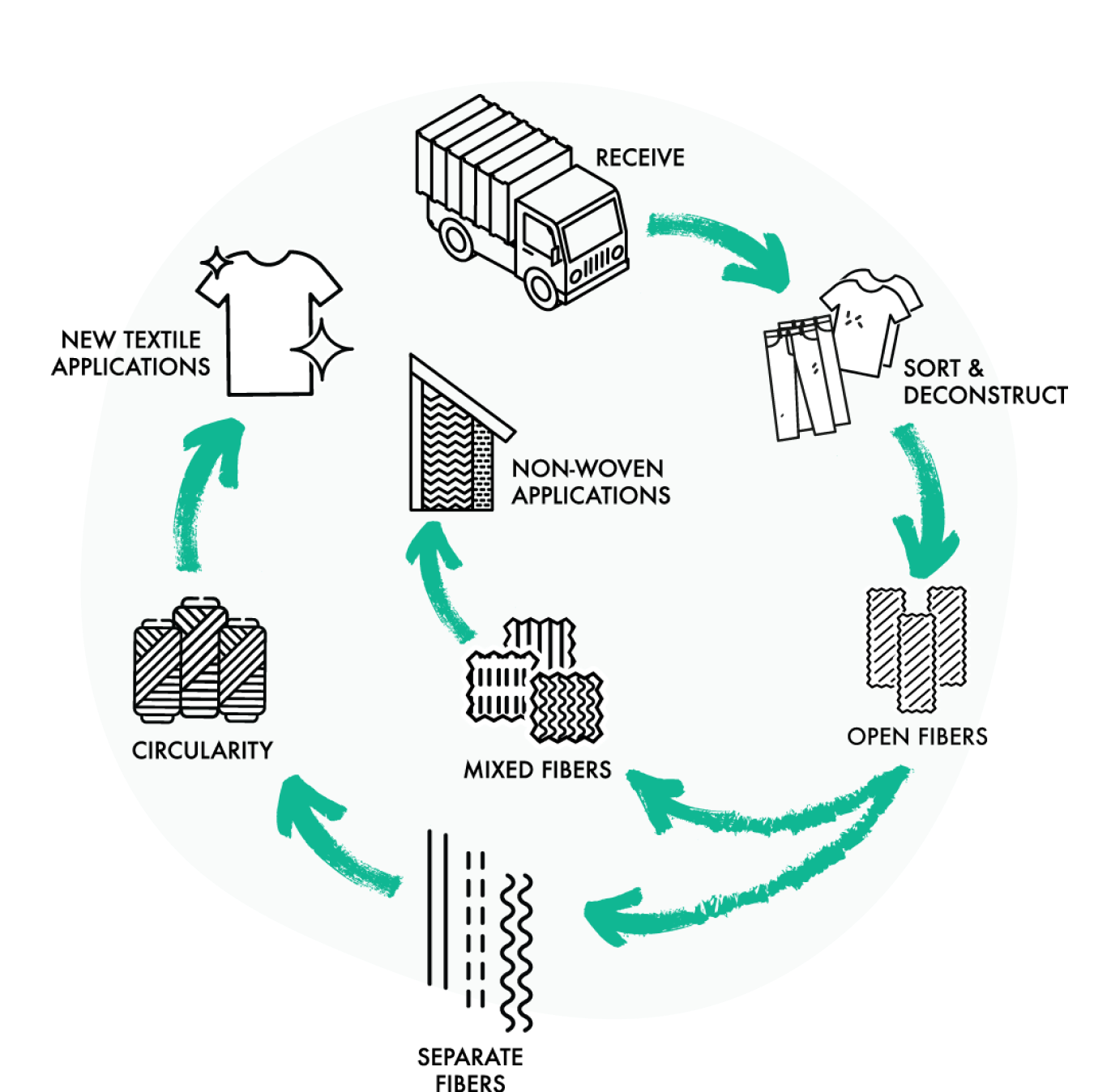
Circularity is a system that extends the life of textiles, reducing our need for virgin resources. Through fiber-to-fiber recycling, this system reduces CO2 emissions, water consumption, energy use, and physical waste. Simply put, circularity creates a better world for us and future generations.
When you partner with Looptworks, you join a circular system that’s making a positive impact on the environment. How big of an impact? Since 2009, Looptworks has achieved the following:
0M
POUNDS OF PHYSICAL WASTE AVOIDED
0B
GALLONS OF WATER SAVED
0K
METRIC TONS OF CARBON EMISSIONS AVOIDED
Let's Do This Together
We work with brands and organizations across the United States, providing innovative solutions for managing large quantities of excess materials. Our partners include fashion and apparel brands, municipalities, cut and sew manufacturers, and industries such as hospitality, medical, and waste collection. Looptworks also supplies clothing brands, spinning mills, and the non-woven market with circular fibers to cycle into new materials.
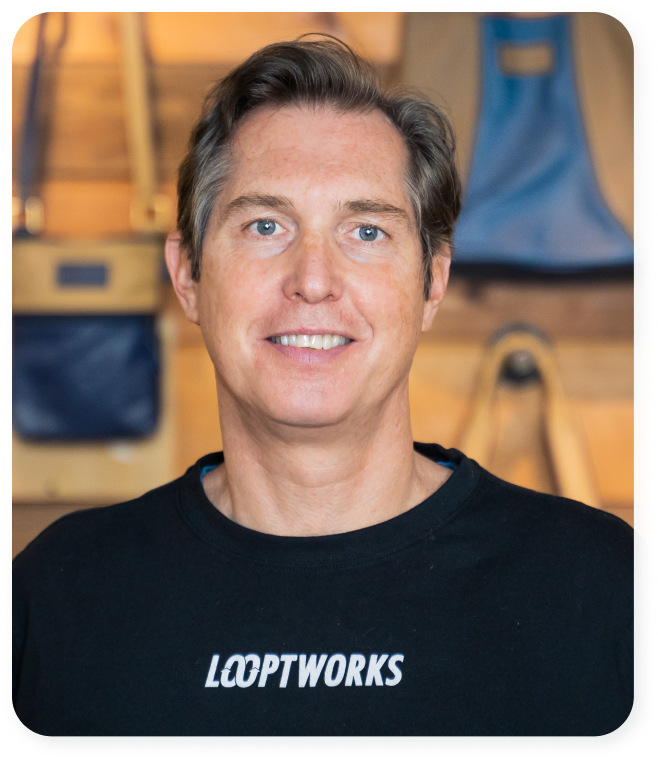
Scott is a visionary leader with more than 32 years of experience in strategic branding, innovative product creation, supply chain sustainability, and sales and marketing for global organizations. He founded Looptworks in 2009 as an industry solution for turning excess materials into upcycled consumer products. In 2022, Scott transitioned the company to a B2B business model focused on eliminating global textile waste through closed-loop solutions.
Scott Hamlin
Founder & CEO
Scott is a visionary leader with more than 32 years of experience in strategic branding, innovative product creation, supply chain sustainability, and sales and marketing for global organizations. He founded Looptworks in 2009 as an industry solution for turning excess materials into upcycled consumer products. In 2022, Scott transitioned the company to a B2B business model focused on eliminating global textile waste through closed-loop solutions.